

Through the eyes of the very young children: Omar and Dagbedji, aged 3 and already showing immense courage
written on the 19.06.2026At the age of three, you do not t understand everything, much less illness. But you feel everything, particularly the absence of loved ones and the presence of unfamiliar faces. At this age, the world is discovered through sensations: arms that carry, voices that soothe, eye contact that reassure. Play becomes a way of connecting with others as well. For Omar and Dagbedji, as for the other young children welcomed at La Maison, a delicate balance is built during their stay, between the gravity of their medical condition and the light-heartedness of childhood.
By Sanja Blazevic
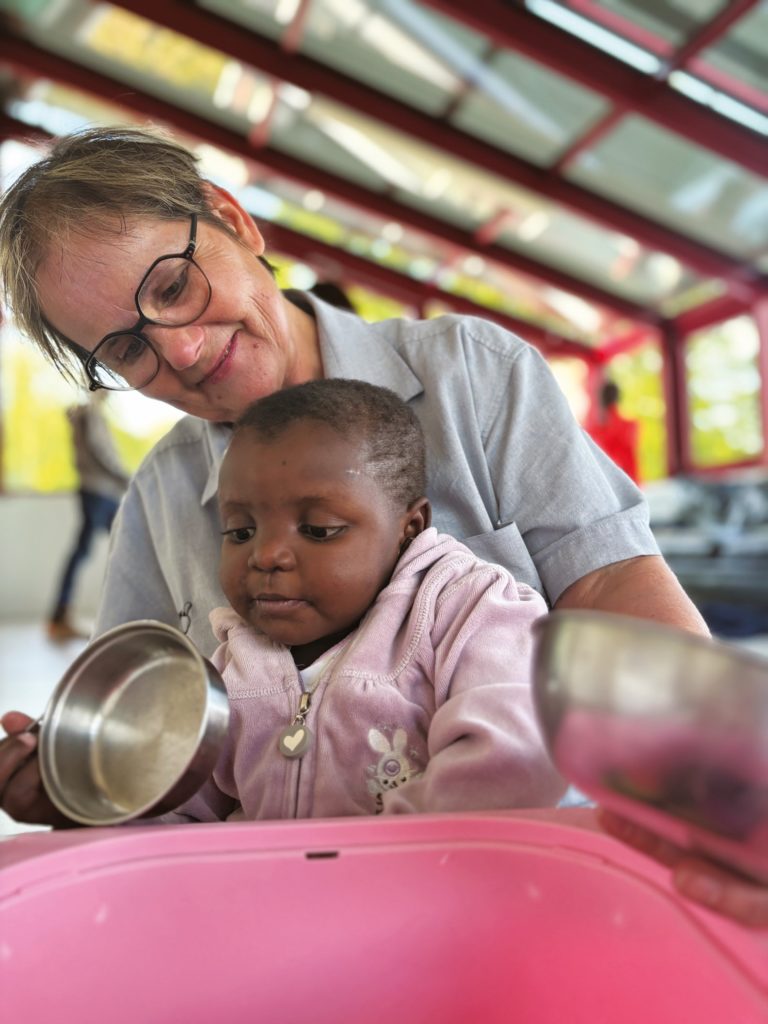
“From the moment a child arrives, right from the very first minutes, we seek to establish a climate of trust.”
Diogo Pereira, coordinator
Crossing borders to heal
At just three years old, Omar and Dagbedji were transferred to Switzerland as a matter of urgency. Born with a heart defect, they grew up suffering from shortness of breath and premature weakness.
For them, as for the other children at La Maison, all begins at the airport, in that place suspended between two worlds. After a long and often gruelling journey, the child arrives accompanied by a volunteer from Aviation Sans Frontières. They are tired, sometimes anxious, and plunged into a completely new environment. This journey is an opportunity, but it is also a sudden upheaval: leaving their family, crossing borders, landing in an unfamiliar country.
“From the very first minutes, we seek to establish a climate of trust”, says Diogo Pereira, a member of the coordination team that welcomes the children at Geneva Airport. “We introduce ourselves and call the child by their first name to show them they are expected. We get down to their level and use simple sentences.” But with very young children, words matter less than other things. Everything depends of the quality of the presence: eye contact, tone of voice, body language. “They observe a great deal. The way we behave will determine whether or not they feel safe.”
For Diogo, what strikes you first about a very young child is the vulnerability they carry within them. “With Dagbedji, what also struck me was his courage. You could see the fear and exhaustion on his face, but also a kind of inner strength that was impressive for his age.”
Certain gestures then become universal: a smile, an outstretched hand, a ‘high five’, sometimes a hug when the child accepts it. “We try to build a bond right from the start, even if it is fragile, so that we can nurture it as it grows. We always maintain a calm and caring demeanour, so that the child can open up at their own pace.”
A smooth arrival
Unlike most children who arrive at La Maison after a night’s observation in hospital, Omar and Dagbedji were admitted directly for their operations. In the days leading up to the procedures, the coordination team visited them regularly, which helped them find their bearings. “Dagbedji, for her part, remained intubated for two whole weeks, so the recovery phase was a long one. Our constant presence was beneficial for her”, reports Diogo.
After this stage, La Maison becomes a new anchor point. Here again, everything hinges on those first few moments. “You can tell straight away, from the child’s eye contact and posture, how the transition has gone”, says Laurence Lévy, one of the childcare educator at La Maison.
This marks the start of what she calls a ‘dance of approach’, characterised by observation and gentleness. Every child reacts differently. Some quickly settle into new arms, provided the welcome is warm. Others need a few days to start feeling at ease. “We adapt our tone of voice and the way we move. The more distressed the child is, the slower we move and the more gently we speak.”
Elodie Berthaud, another childcare educator, adds: “Omar opened up very quickly after he arrived. Dagbedji has a different temperament; she’s more reserved. She needed more time to settle in. She is now very cheerful and laughs a lot.”
“Our role is to make this transition as smooth as possible, to create a safe haven”, continues Laurence. “We need to give the child affection and love. Sometimes, a helping hand placed at just the right moment is enough on their back, on their head, simple gestures, but ones that provide a deep sense of safety.”
Deciphering silences and tears
At La Maison, one in five children is under six years old. This is a significant proportion, highlighting the specific challenges involved in caring for the youngest children. For them in these early years of life, their needs are immense, yet their means of expression are still limited.
“The main difficulty we face is deciphering their crying. Especially right at the start, when we do not yet know the child. Are they in pain? Scared? Hungry? Do they miss Mum and Dad?”, Elodie explains. “At age of two- or three-year-old we will not necessarily be able to express how they are feeling”, Laurence continues. “They will show it in other ways – through their behaviour, their restlessness, or, conversely, through their silence.” And that is often what is most striking. “A child who is too quiet is sometimes the one who is struggling the most. The one making a noise naturally attracts attention, but our role is also to notice those we can not hear.”
Support therefore relies on careful and constant observation. We need to read between the lines in their gestures, their glances and changes in behaviour. To spot pain without it being verbalised, or to understand unusual tiredness. On a day-to-day basis, it also involves supporting children with basic life skills: eating, walking and toilet training. These are ordinary milestones, but behind them lies a vital objective: to enable the child to continue developing, despite their illness.
Some of the very young children have barely taken their first steps when they arrive at La Maison, like Dagbedji, or have limited physical abilities due to their medical conditions. Changing nappies is an extra task, as is cutting up food, helping them blow their noses, getting them off the sofa, and settling them into high chairs at mealtimes. “Some eat quickly or eat a lot, like Omar, who needs to get used to eating more slowly. Others need to be encouraged to eat more. We pay close attention to everything”, says Laurence.
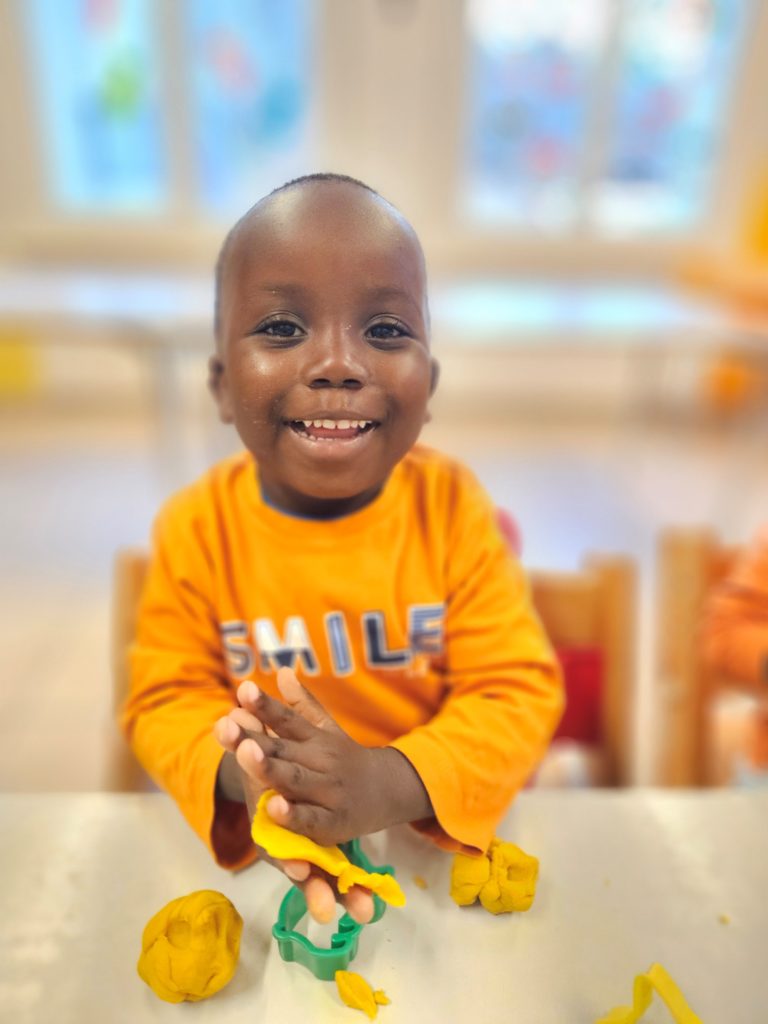
Creating the everyday within the extraordinary
At the age of three, a child’s main needs are to play, to be protected and to have a sense of routine, even when their world is turned upside down. Days at La Maison are therefore structured, punctuated by recognisable phases: waking up, meals, learning and playtime, a nap, and bedtime. “The more consistent the routine, the more the children will be able to build emotional safety”, explains Elodie. “This structure gives them confidence. They know what to expect”, adds Laurence. “But if we can let them choose – for example, a jumper, a colour or a book – we do. These decisions give them a sense of control over their environment.”
Twice a day, the little ones go to the nursery with the teaching staff. There, they sing, play and discover the world. The welcome song, in particular, is a key moment. “Music soothes, brings people together and channels emotions”, explains Laurence. Given the diversity of languages, sign language has been introduced, amongst other things to accompany the lyrics. “It is fun and reassuring. Children love it.”
“We offer them lots of activities at nursery. They can draw, paint and play freely. We also have early learning games, as well as games to help them learn numbers and letters. Meanwhile, the psychomotor courses promote their motor skills”, explains Elodie.
Play takes centre stage in this approach. Not simply as entertainment, but as a genuine educational tool. “Play is learning. It’s about understanding the world and taming one’s emotions. You fall over, you laugh, you get back up”, summarises Laurence.
The hours spent together at the nursery also help children to develop their social skills. “Being part of a community does them a world of good, because that is how they live back home, surrounded by their extended family. We meet this need through the very essence of La Maison”, observes Elodie.
When the night awakens the anxieties
The evening, however, often marks a shift. After a day full of stimulation, the child is left to their own devices. They start to miss their parents and siblings. So, the team reads a story, sings a lullaby and establishes routines. These are all ways to help them get through the night.
“Anxiety is particularly noticeable at the start of a stay, when the children are still asking for their parents a lot. To calm the little ones down, I take them with me to put the others to bed, so that they can see that other children are sleeping there and observe the ritual involved. We don’t force anything at first: if a child is very upset, we keep them with us to maintain a sense of safety and trust”, says Elodie.
For very young children, staying alone in their beds is almost impossible in the first few days. “Dagbedji spent his first three nights in the arms of the night nurse, who looks after the children from 9 pm to 7 am. It took four or five days before she was able to sleep alone. Omar also needed someone to be there and some cuddles to fall asleep. He arrived at La Maison at the same time as Boubacar, a little boy he had met in hospital, so the transition was easier for him. Now, in the mornings, he likes to come with me to wake up the older ones. He strokes them and says, ‘Sleep is over.’ ”
Caring also means dressing
Alongside medical care, there is a form of attention that is almost invisible, yet essential: the act of welcoming. Colourful T-shirts, soft pyjamas, tiny socks: at La Maison, the children are given clothes as soon as they arrive.
Naomi Berta, one of the five housekeepers, prepares each set of clothes with meticulous care. Around thirty items, chosen according to the season, size, and also specific needs. “We make sure the child has everything they need for the duration of their stay.”
Comfort is essential. Clothes must be suitable and easy to put on, particularly if the child is feeling unwell following a recent operation. “If we can make them happy by letting them choose their favourite colour or pattern, we are happy to do so.”
The fitting itself helps to build a bond. “We talk to the child, reassure them, and try to distract them. The important thing is to prevent them from crying, especially if they have a heart condition, because that would tire them out enormously. So we sing, we play, we try to make this moment as pleasant as possible.”
These small gestures of care may seem secondary, but they are not. Here, dressing someone is not just about covering them up. It is already a form of care. It is about creating a sense of comfort and dignity.
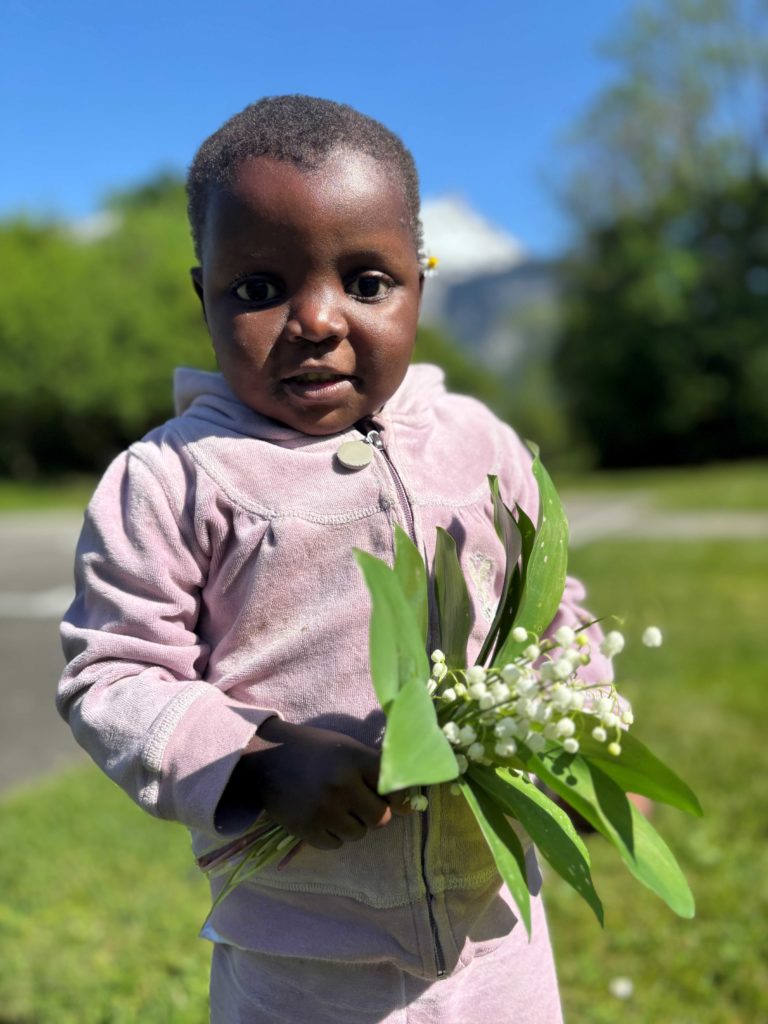
“A child remains a child, regardless of their age, origin, or health. They need to be surrounded by and receive love.”
Elodie Berthaud, childcare educator
Arms for healing
At La Maison, it often all begins with a simple gesture: opening one’s arms. This offers a little comfort in a daily life disrupted by illness and being far from one’s homeland.
“A child remains a child, regardless of their age, origin or health. They need to be surrounded by and receive love. But they also need to discover the world, have fun and laugh”, emphasises Elodie. She mentions Omar’s case: “He is very cheerful, bright, resourceful and a bit of a joker, even at just three and a half years old. When he falls over, his first reaction is to laugh.”
Despite the difficulties, there are still precious moments: a smile, a glance, an interaction. “Sometimes that is enough to brighten up a day”, concludes Naomi, who finds deep meaning in her work. “Knowing that we are part of their care journey, even indirectly, is a source of great pride.”
Omar and Dagbedji, like so many others, faced immense hardships at a very early age. But all around them, a human chain is rallying — healthcare and educational teams, coordinators, behind-the-scenes staff, volunteers and donors — to enable them to recover without having to give up their childhood.
Would you like to donate clothes or shoes?
Your donations are very welcome!
For further information, please call 024 471 26 84.