

Rafik, a heart that stands the test of time
written on the 05.01.2026On the terrace of La Maison, the morning sun illuminates Rafik’s serene face. In his hands, a tray of mint tea exudes a scent of sugar and fresh leaves, which mingles with the light air of Massongex. Behind this apparent tranquillity, however, lies a silent struggle.
At 46, Rafik is living on borrowed time. His fragile heart, which has undergone several operations, now beats to the rhythm of waiting. A new operation is being prepared at the Geneva University Hospitals (HUG): the riskiest one yet. Rafik is one of those whom La Maison has never forgotten. The child who was once taken in has become a man, returning here several times to catch his breath, both literally and figuratively.
By Valérie Pellissier
One beat after another
Rafik was born in Casablanca in 1979 with a serious heart defect called tetralogy of Fallot. “When I was a baby, I was all blue. My mother always carried me on her back. I couldn’t walk until I was six”, he says softly.
A Moroccan doctor referred his parents to the Terre des hommes Valais Foundation. “That’s how I came to Massongex for the first time in 1986.”
The operation he underwent in Switzerland saved his life. The world finally opened up to him. He walked, played and went to school. But the disease had not yet had its final say.
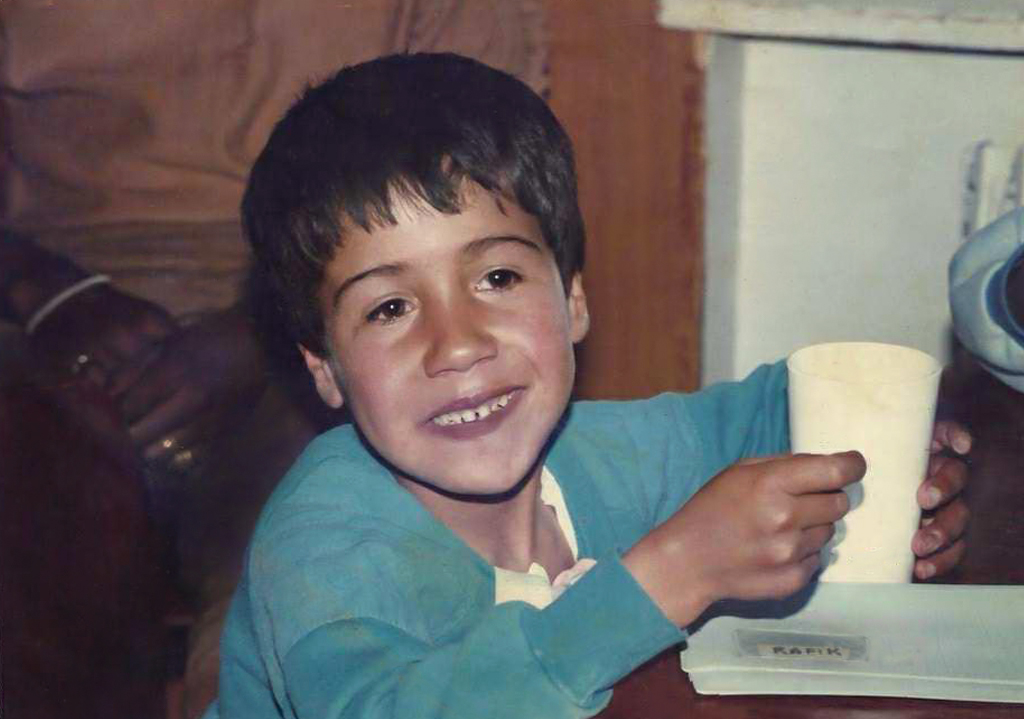
“When I was a baby, I was all blue. My mother always carried me on her back. I couldn’t walk until I was six.”
Rafik
With each operation, a rebirth
Since childhood, Rafik has undergone six heart operations. Each one has left a thin scar on his chest and a deeper one on his soul.
Still receiving treatment in Lausanne and Geneva, he remains infinitely grateful to the doctors who care for him: Professor Tornike Sologashvili, Dr Judith Bouchardy and their teams.
At the end of this year, a seventh operation awaits him. The risks are considerable, and he is fully aware of this. He speaks about it in a calm voice, but his eyes betray a concern that he is trying to control. “I am a believer”, he says with restraint. “I leave things in God’s hands. You never know what you’re going to die of. The most important thing is to live in peace.”
A man standing tall, surrounded by kindness
For Rafik, returning to La Maison means returning to a place filled with kindness and gratitude. Here, he enjoys serenity, closeness to nature and, above all, the human warmth that warms the heart. “I love walking in the surrounding area, breathing, feeling alive”, he murmurs.
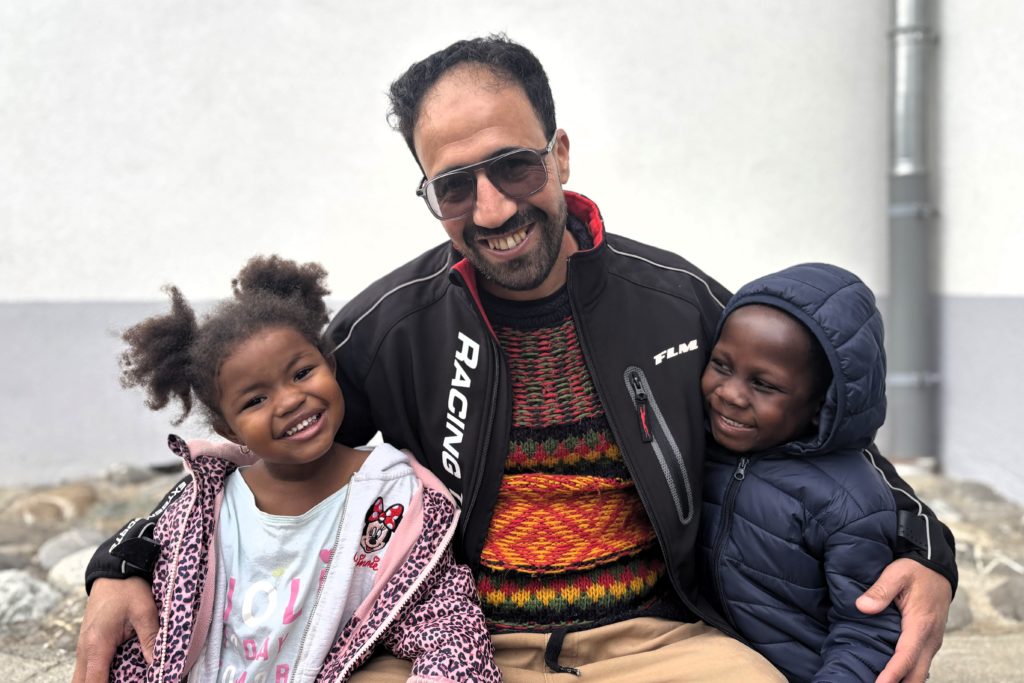
Often the only adult among the convalescing children, he naturally finds his place. He helps in the kitchen, assists the staff and accompanies the children. “Some are shy at first, but after a few days, we become friends. They see me as a big brother.” His smile lights up: “I come from a working-class neighbourhood. Where I come from, everyone helps each other.”
Around him, a whole team is on hand: educators, nurses, volunteers, coordinators, godmothers and godfathers. Each and every one of them, in their own way, makes this miracle of solidarity possible.
Alioune’s perspective
Alioune Ngom, head of the education sector, has known Rafik for a long time. “I first met him in 2006, during my internship in Massongex. He was a young adult then. Today, he is a man in his own right.”
He speaks of him with restrained emotion: “He is very sensitive. When a child cries, he takes them in his arms and reassures them. Through him, we see everything that La Maison stands for: courage and kindness.”
The increasingly frequent presence of adults like Rafik is pushing the institution to reinvent itself. “Here, everything has been designed for children, but we also offer adults a space dedicated to them: a specially adapted room and activities designed for them.”
Each departure, however, remains a difficult moment. “Every time, he says to me: I don’t know if I’ll be back… I’ve had my chest opened several times, and it’s not like buttoning up a shirt.” Alioune pauses, then adds softly: “He talks about his illness with poignant lucidity, but always with a dignity that commands respect.”
“He is very sensitive. When a child cries, he takes them in his arms and reassures them. Through him, we see everything that La Maison stands for: courage and kindness.”
Alioune, educator at La Maison
Behind the scenes of an arrival
Behind every stay at La Maison lies a tremendous amount of collective work.
Zihret Hasanovic, coordinator between hospitals and La Maison, orchestrates every detail: plane tickets, formalities, volunteer support, coordination with health specialists and the « Une Chance, un Cœur » Foundation, which took care of Rafik. Nothing is left to chance. Everything is organised so that the transition between the country of origin and Massongex takes place with humanity and precision.
But welcoming adults means learning to provide support in a different way. “Those who have already been here can sometimes come directly to La Maison from the airport. Their needs are different. We don’t share games or colouring books, but conversations about life, worries and faith.”
Zihret agrees with Alioune and also emphasises the need to offer more privacy. “If we welcome more adults in the future, we will need to provide more single rooms and a quieter, more restful environment.”
He becomes emotional when he talks about these life journeys that have travelled through time: “Seeing people like Rafik, whom we knew as children, return years later for another vital operation is deeply moving. It’s not just a medical procedure, it’s a story of love and care that continues.”
A message from the heart
Before leaving us, Rafik slowly puts down the teapot. His eyes fill with tears, overcome by an emotion he makes no attempt to hide. “I want to say thank you. Because with very little, you can save a life. Here, with fifteen francs, you can buy a pizza. At home, with fifteen francs, you can feed a family. And sometimes, you can save someone’s life.”
A silence falls. Then his face lights up with a smile that is both gentle and fragile: “Without La Maison, I wouldn’t be here today. Giving is offering a chance at life.”
“Without La Maison, I wouldn’t be here today. Giving is offering a chance at life.”
Rafik
The echo of an existence
Rafik lives in Morocco, but part of his story is still being written in Massongex. It was there that his heart was revived, carried by invisible hands that continue to weave this chain of solidarity day after day.
Through him, one thing is clear: La Maison has no age. It has faces, destinies, a humanity in motion. And as long as there are hearts to mend, La Maison will continue to keep hope alive, so that others, like Rafik, can grow, heal and dream.
But none of this would be possible without the generosity of those who support it. Every donation, large or small, rekindles the flame that has lit La Maison for more than half a century.
“An essential act of humanity”
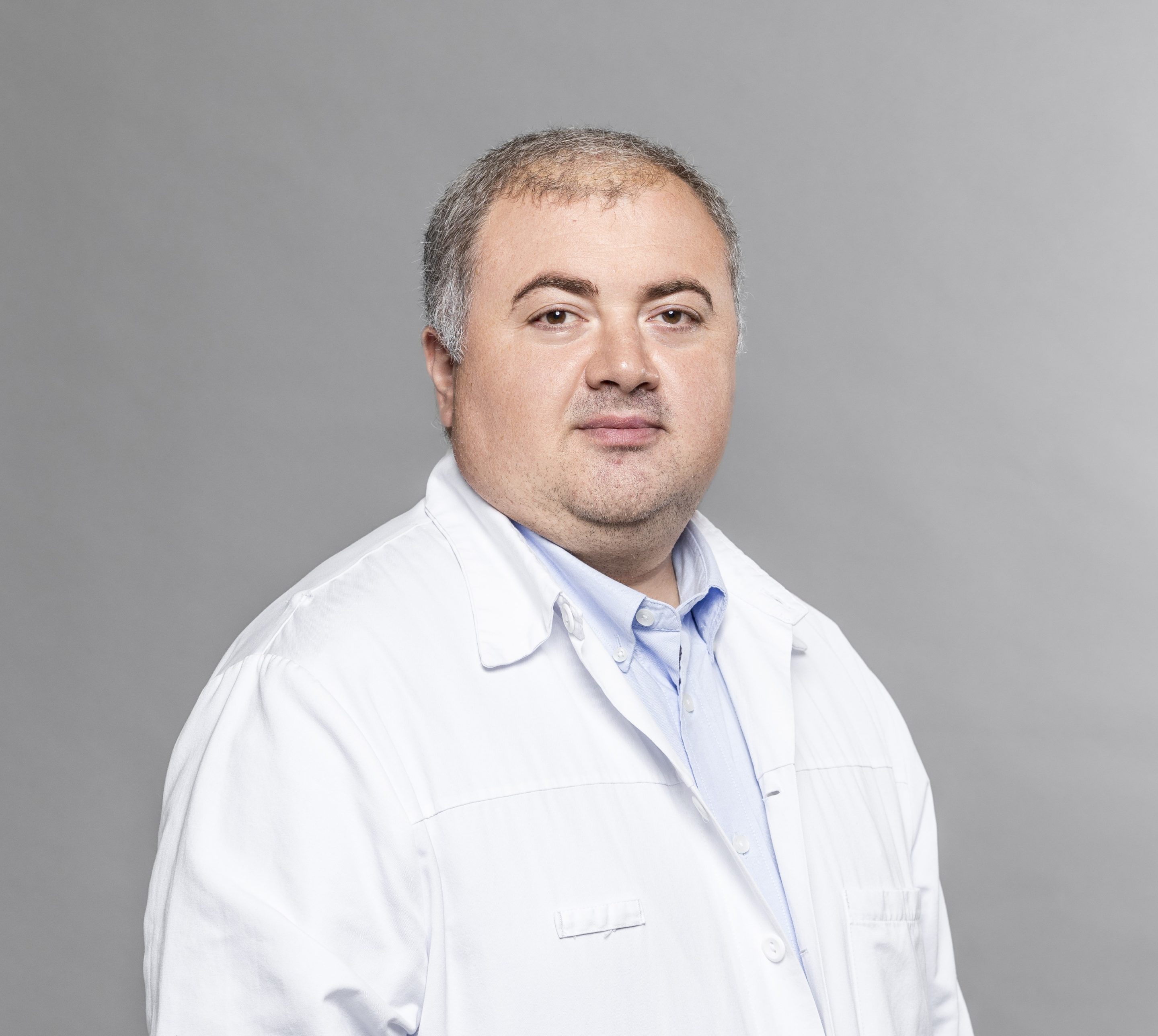
Paediatric heart surgery: Swiss excellence by Tornike Sologashvili. Interview with a surgeon with a big heart.
An internationally renowned surgeon, Prof. Tornike Sologashvili has established himself as a leading figure in paediatric heart surgery. From Georgia to Switzerland, his technical expertise, humanitarian commitment and role as a trainer make him a key player in the medical field, recognised worldwide.
The specialist looks back on Rafik’s journey, the medical and human challenges posed by his upcoming operation, and the solidarity that each gesture offers to these fragile lives.
Can you explain Rafik’s heart condition and the main stages of his journey?
Rafik was born with tetralogy of Fallot, a complex heart defect. He first underwent surgery as a child to have a pulmonary valve fitted.
Like all implanted tissues, this valve gradually deteriorated, requiring several reoperations. Today, Rafik is facing his seventh heart operation because the current valve is no longer functioning properly and is causing high pressure in the right side of his heart.
What are the challenges of this new procedure?
Each time the chest is reopened, the risks increase, as the tissue becomes fragile and adhesive. However, we hope to be able to use a percutaneous solution, without opening the chest. If this proves impossible, we will perform a new surgery with the implantation of a homograft, human tissue taken from a donor, which is more durable and better tolerated.
The stakes are high. Without treatment, the pressure on his heart could lead to terminal failure.
Rafik is part of a generation of children who underwent surgery and have now become adults. How does that change things for you?
These patients have grown up, but their conditions remain congenital. This requires dual expertise, both paediatric and adult, because their hearts were reconstructed in childhood but evolve over time. These are complex cases, straddling two specialities.
How would you describe your relationship with Rafik?
We have developed a bond of trust over the years. He regularly sent me his cardiology reports from his country. When it became possible to take him back into our care, it was greatly satisfying. For us, these journeys are as much medical as they are human.
What role does La Maison play in his recovery?
It is fundamental. Many patients have known La Maison since childhood and find it a warm, safe and humane environment. It is a place that promotes mental and physical recovery after major surgery. Without this environment, convalescence would be much more difficult.
A final word for the donors?
I am deeply grateful to them. Without their support, these operations would not be possible. In their countries of origin, these treatments are simply inaccessible.
Thanks to the solidarity of donors, these patients can continue to live, hope and rebuild their lives. It is an essential act of humanity.
A European first: when science and the heart beat as one
In September 2025, a new page was written in the history of medicine. At the HUG, Professor Tornike Sologashvili, in collaboration with Dr Julie Wacker, performed Europe’s first partial heart transplant on a twelve-year-old child with a complex congenital malformation.
This procedure, the result of exemplary collaboration between cardiologists, surgeons and caregivers, opens up a new avenue in paediatric heart surgery.
“The heart muscles are preserved, the risk of rejection is reduced, and life can follow its natural course”, explains Dr Wacker.
“It’s a victory for science, but above all a victory for the heart”, says Prof. Sologashvili.
An act of care and daring that reminds us that, sometimes, medicine borders on grace.