

Estelle and Kevin: hand in hand towards recovery
written on the 05.01.2026At La Maison, during their long weeks of convalescence, the children form strong and intense bonds. Their illness brings them closer together, as does life within a large family. Some friendships are particularly deep, such as the one between Kevin and Estelle, aged five and eight.
By Sanja Blazevic
Companions in courage
Born with heart defects, the two children grew up in Madagascar, one of the poorest countries in the world, where access to healthcare remains severely limited. Estelle’s symptoms worried her parents: she coughed, had repeated bouts of bronchitis and experienced chest pain when she exerted herself. The little girl was actually suffering from an atrial septal defect. This condition is characterised by a “hole in the heart”, i.e. an abnormal opening between the two atria. As the medical team at La Maison points out, the operation to repair this defect can be relatively simple if the opening is not too large, but it is impossible to perform in her country, which is sorely lacking in medical resources.
Kevin’s case is more complex. He has a potentially fatal heart condition, which causes a lack of oxygen in his body. At two and a half years old, he underwent surgery in France, but the progression of his condition required a second operation.
Transferred together from Madagascar by our partner Mécénat Chirurgie Cardiaque, Estelle and Kevin share the same flight to Switzerland. This journey away from their families immediately brings them closer together.
Célia Lecocq, one of the nurses at La Maison, notes their resilience: “Our residents show admirable courage. The trust placed in us by their parents is equally remarkable: they leave their children in our care in the hope that they will return home cured.”
Inseparable in the face of illness
The two young Madagascans, who are very close, become a source of support for each other. “They speak the same language, have the same skin colour and come from the same country. Kevin doesn’t understand French very well, so Estelle translates everything for him. This helps him to integrate better and follow the day’s activities more easily”, explains Melody Methot, one of our educators.
Beyond her role as an interpreter, Estelle has become a real role model for Kevin, like a big sister. During their first few weeks at La Maison, Kevin sought out her reassuring presence, following her everywhere. “Normally, girls and boys sleep separately”, adds Melody. “But bedtime is always a delicate moment for children. So we wanted to take it slowly, letting them stay in the same room until the separation happened naturally.”
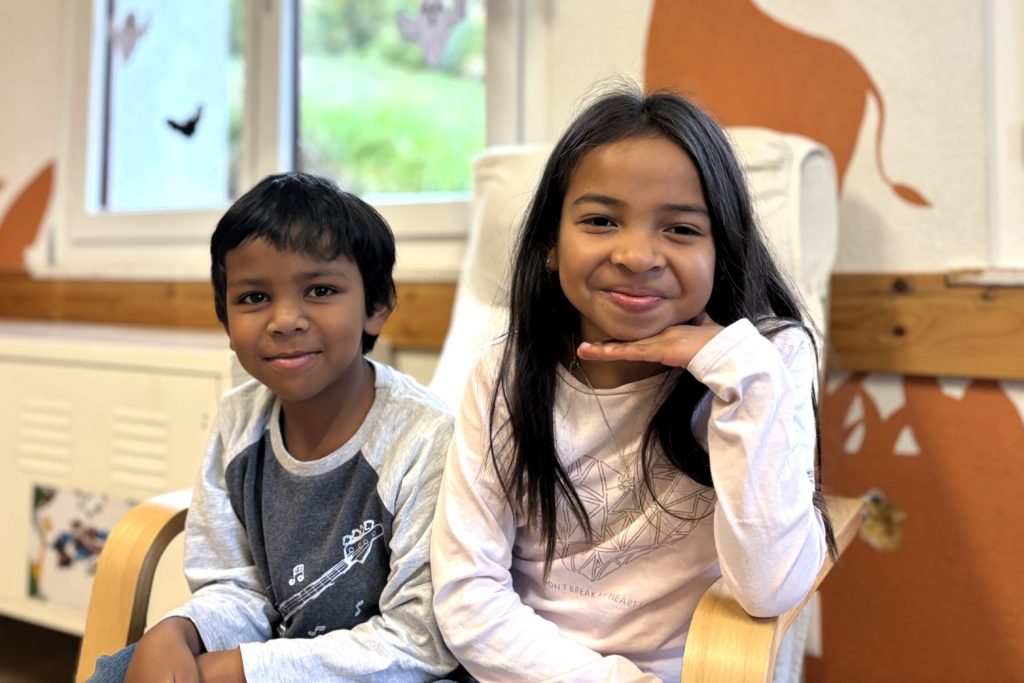
“The strong bonds they form with each other ease their pain.”
Melody Methot, educator
Before the operation: reassuring support
At La Maison, there is constant collaboration between the healthcare and educational sectors, particularly in terms of pre-operative preparation. This extends to medical partners to ensure continuity of care. “We send the hospital a description of the child’s treatments and lifestyle habits. This allows us to adapt the follow-up care on site”, explains Célia.
Psychological preparation is essential beforehand. “We explain the operation to them in a way that is appropriate for their age and level of understanding. We reassure them about the procedure, but also about the environment in which they will be staying: the coordination team on site, the mentors who will come to say hello, and the friends from La Maison who are already hospitalised and whom they will be able to see again. Support also comes from other children who have undergone surgery, who are happy to comfort others and proudly show off their scars as a sign of victory”, continues Emilie Tiquet, a nurse.
Within the educational team, support is tailored to the needs of each child. “Some are more confident, others are more apprehensive. Sometimes a simple hug is enough. Other times, we talk to the child to ease their worries or share a moment of silence with them to allow them to process their emotions”, explains Murielle Augier, another educator.
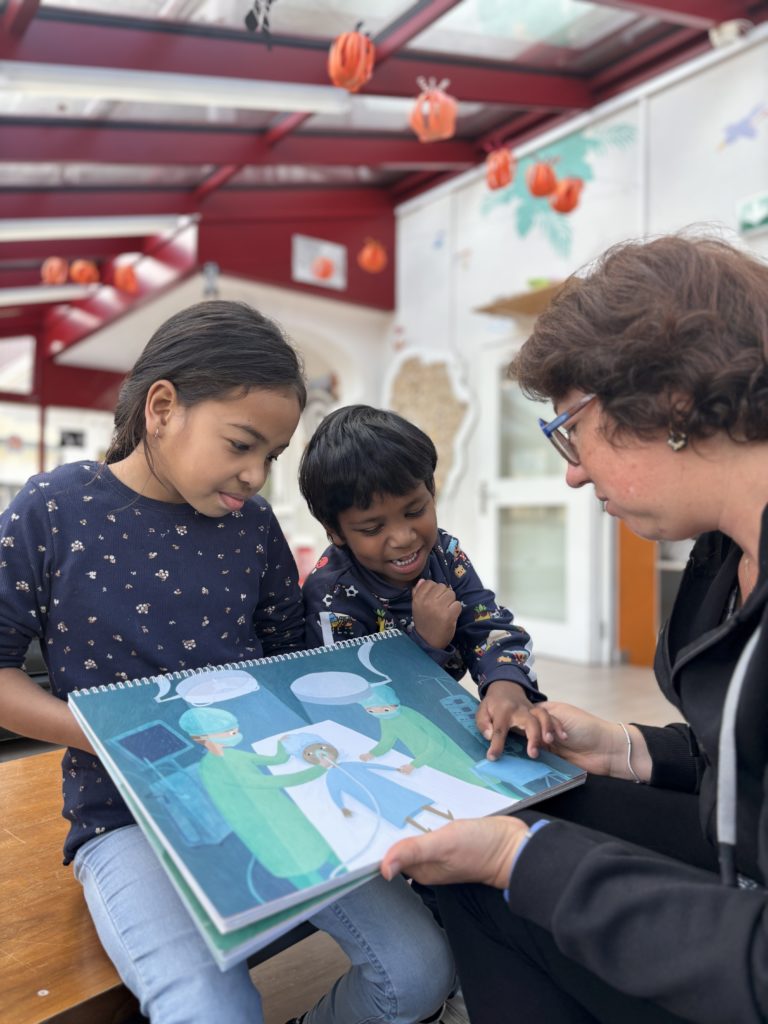
“We make sure that the trip to the hospital is as calm as possible. To help the children understand what is going to happen, we also use an illustrated book published by the CHUV. It is a valuable visual aid for the youngest children and those who do not speak French.”
Hospitalisation: a silent victory
For Kevin, the approach of the operation is particularly stressful: the separation from Estelle and his new surroundings upsets him. The night before the little boy is admitted to hospital, Estelle comforts him at bedtime, lulling him with familiar words in their mother tongue.
At the Geneva University Hospitals (HUG), Kevin is surrounded by a few friends from La Maison who are being treated at the same time as him. He is becoming more relaxed and opening up to others. “This temporary separation has been beneficial. Now, our two inseparable children are playing separately and sleeping in their rooms with their new friends from La Maison”, observes Melody.
A future to build
Estelle and Kevin are children with a contagious zest for life. They have integrated perfectly into community life at La Maison. “Estelle willingly helps the younger children, for example with washing their hands, and enjoys setting the table with the teaching staff”, explains Murielle. While she has found an adoptive brother in Kevin, Estelle has also formed a strong bond with Fatimata, a 16-year-old girl from Benin who has also had heart surgery.
Estelle attended school in Madagascar and is continuing her education at La Maison. What does she like best? Writing and drawing, she says with a big smile. Kevin attends kindergarten with his peers, where he learns letters, numbers and colours, among other things.
Estelle says she likes to play with her dolls, both at home and at La Maison. When playing outside, she loves riding her scooter. Kevin prefers his little motorbike.
“Children have a real ability to adapt”, concludes Melody. “The strong bonds they form with each other ease their pain. It’s touching to see them enjoying their childhood, despite the trials they’ve been through: having fun, laughing, playing.” These are precious moments of normality, when their illness temporarily fades away.
Estelle and Kevin’s story shows that friendship is one of the greatest strengths on the road to recovery. It is thanks to your generosity that children like them can receive care, flourish and simply live.