

Riviera-Chablais Hospital: a caring welcome on the road to recovery
written on the 08.04.2026Before complex operations and weeks of convalescence at La Maison, a preliminary, essential, and decisive stage marks the start of the journey: the initial health assessment. For some children, this takes place at the Riviera-Chablais Hospital. Their clinical condition is carefully assessed there, in an environment designed to soothe, reassure, and support.
It is here that the first bonds are formed, before specialist medical care takes centre stage. Thanks to its paediatric services and its proximity, the hospital also handles non-life-threatening emergencies and further tests, ensuring valuable continuity of care throughout the stay.
By Valérie Pellissier
A journey of hope
One morning in January, a plane lands on the tarmac at Geneva Airport. On board, seven-year-old Saliou discovers a new world, filled with hope: the hope of treating his heart, which suffers from aortic valve malformation. The child was identified in his home country, Senegal, by Mécénat Chirurgie Cardiaque, one of La Maison’s partners, so that he could receive medical treatment in Switzerland.
After hours of flying through the night, leaving his family and familiar surroundings behind, Saliou takes in his surroundings. In Switzerland, Heang Cavadini, a coordinator at La Maison, welcomes him. This first face marks the beginning of a chain of care, solidarity, and kindness, orchestrated with precision. The man approaches calmly and extends his hand.
“The first point of contact is really about reassuring the child, showing them that they are welcome, and helping them to start trusting us,” he explains.
After this long journey, they first head to the airport infirmary for a medical check-up. Then, in the car on the way to Riviera-Chablais Hospital, Saliou falls asleep, and his little, weary heart finds a moment’s peace.
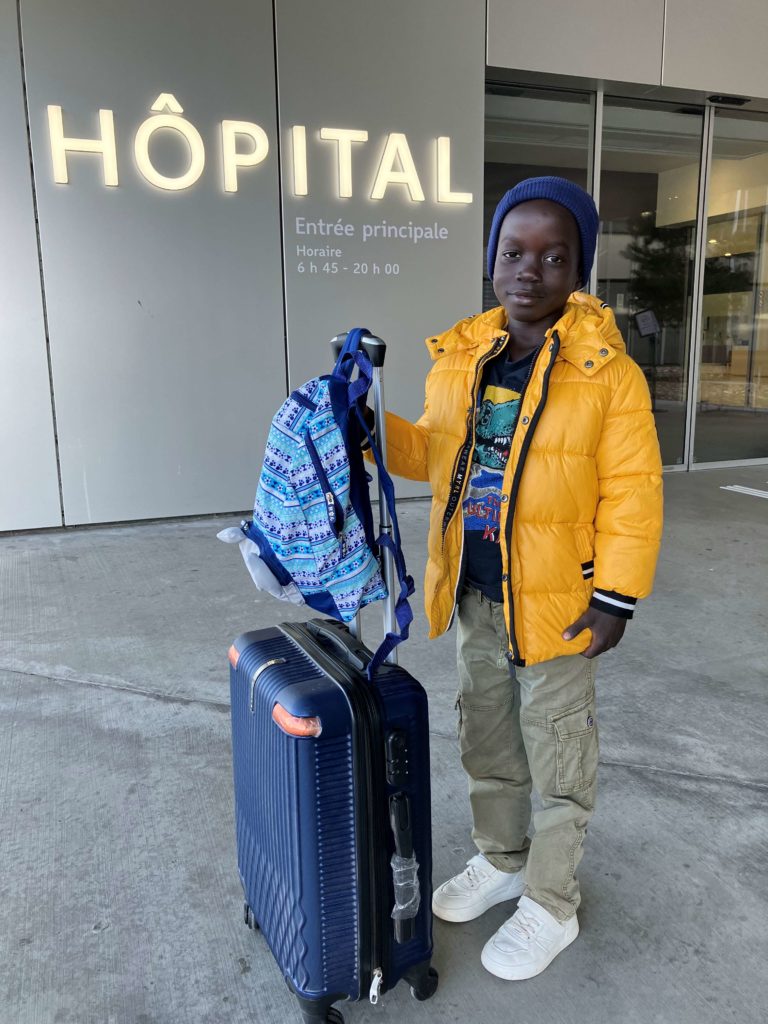
“The first point of contact is really about reassuring the child, showing them that they are wanted, and helping them to start trusting us.”
Heang Cavadini, coordinator at La Maison
When a presence brings comfort
À l’hôpital, tout a été coordonné en amont avec Karen Zucchinetti Rapin, responsable de l’équipe des douze bénévoles qui entourent les enfants durant cette étape clé. L’une d’entre elles, Carmen Jaramillo, attend déjà. A godmother for several years, she is familiar with these arrivals and the looks etched with the ordeal they have endured. With the family back home, she becomes a reassuring presence, watching over the child at all times.
She approaches Saliou quietly, bends down to his height, takes him by the hand, and leads him to his room. “I’m going to explain to him, in simple words, that I’ll stay with him, that he won’t be alone, that I’ll go everywhere with him,” she whispers. Creating a trusting relationship is essential. “To do that, I’ve got my little tricks too: stickers, coloured pencils. They keep him occupied, calm him down, and make it easier to connect,” she says calmly.
The initial health assessment can then begin. This stage allows for a precise evaluation of the child’s condition before the next steps in his medical journey. X-rays, blood tests, and an electrocardiogram… Precise and essential procedures, calm voices, constant attention paid to this young boy who is discovering a new world, one of care and reassuring presence.
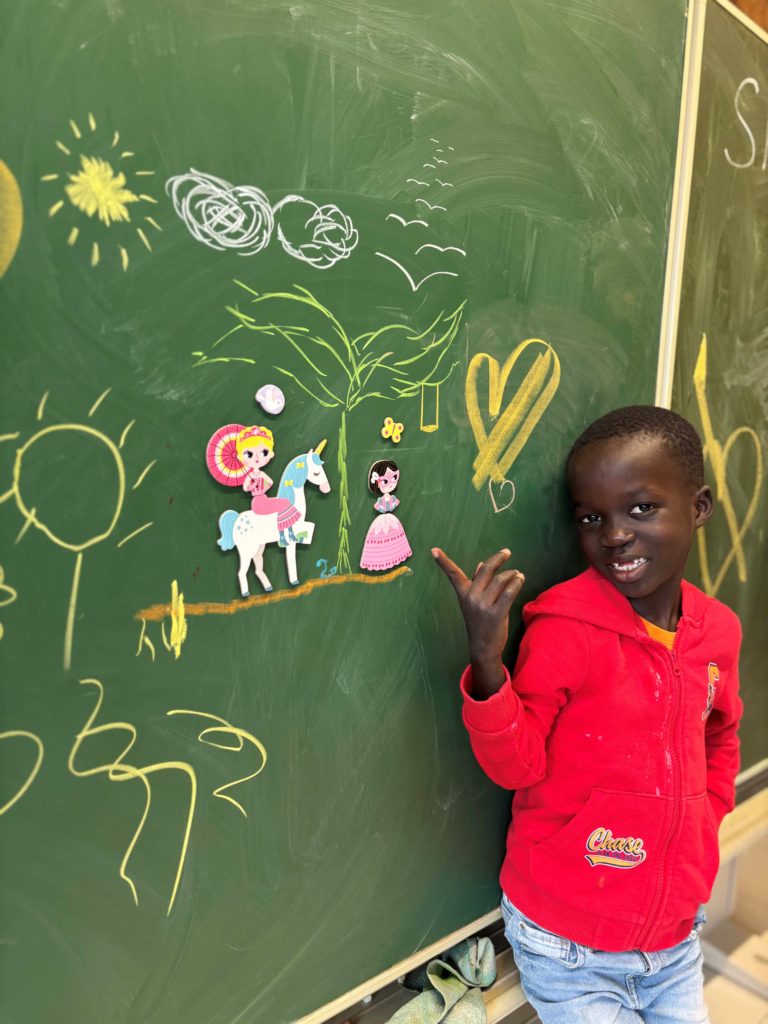
Then, a lighter atmosphere takes hold. A door opens onto a room with a symbolic name: Le Sparadrap. It is a play area designed for little ones, where the drawings remind us that life goes on, despite everything. “It’s a magical place that the children love. A nursery teacher runs activities there,” adds Carmen.
The games, a car track, or even a red lorry sitting on a shelf suddenly become a refuge in the heart of the unknown.
At these delicate moments, the presence of godmothers and godfathers is essential. Through their quiet dedication and constant care, they offer the child a human presence that makes all the difference. Through these silent gestures, a collective sense of solidarity unfolds around the child, reflecting the values upheld by La Maison.
“I’m going to explain to the child, in simple words, that I’ll stay with him, that he won’t be alone, that I’ll go everywhere with him.”
Carmen Jaramillo, volunteer at the Riviera-Chablais Hospital in Rennaz
Hands passing the baton
The hours pass. Carmen hands over to another dedicated godfather, Rico Costa, who in turn takes the time to stay by the child’s side. At Riviera-Chablais Hospital, nothing is done abruptly. The handover takes place with sensitivity. “Here, we work as a team and we’re adults without uniforms,” he explains in simple terms. “That’s important. Without white coats, the child understands that we’re not part of the medical staff, that we’re there for him in a different way.”
The next day, Rico, also a conveyor, sets off with Saliou towards Massongex. In the car, the words gradually find their place. He hands him a photo album of La Maison, describes the surroundings, talks about the other children in similar situations, and the daily life that awaits him. “We encourage the child a great deal. We explain to him that, over there, it will be a bit like home, that he’ll make friends. He won’t be alone with adults in a medical setting anymore,” he says gently.
Saliou listens. He gives a faint smile; something eases. In Massongex, he finds a new home and a community.
A reliable partner, a constant presence
At La Maison, Mélanie Casanova, the head nurse, watches the children arrive with particular attention. She notices Saliou’s reserve, the way he scans the surroundings, as if he is trying to understand the situation first before daring to trust. For her, the role of the Riviera-Chablais Hospital is essential in the children’s care pathway. “It is a local, competent, and reliable partner,” she explains. “Upon arrival in Switzerland, depending on the child’s medical condition, the initial health assessment can be carried out in Rennaz or at a partner university hospital. This is a key step that lays the foundations for their care. Throughout their stay at La Maison, we also know we can count on them for non-life-threatening emergencies, certain outpatient consultations, or additional tests such as X-rays or ultrasounds.”
“These acute situations, which are not immediately life-threatening, are often overlooked, but they must not be underestimated,” emphasises Nathalie Revaz, a paediatrician and member of La Maison’s Board. “Prompt care helps prevent complications and maintain the child’s well-being.”
Working closely with the team at La Maison, Nathalie also shares her medical expertise with the nurses, advising them on how to assess situations and helping to refine decisions, always in the child’s best interests.
Thus, beyond this initial assessment, Riviera-Chablais Hospital provides long-term support for the vulnerable children cared for at La Maison. Cardiac decompensation, everyday accidents, and respiratory problems: these are all situations that require a rapid, appropriate, and reassuring response. Thanks to its specialist paediatric services, A&E and intermediate care, children can be closely monitored, with continuity of care that preserves their stability and energy.
Depending on their state of health, the child is accompanied by a volunteer conveyor, a member of La Maison’s medical team, or transported by ambulance. In all cases, the aim remains the same: to provide them with a safe environment tailored to their needs.
Soon, further stages will follow. More invasive. More technical. In Lausanne, at the CHUV, another of La Maison’s medical partners, surgeons will take over to repair Saliou’s failing heart. But the time for surgery has not yet come. This is a time for welcome, for that first necessary stop where the child can catch his breath before continuing.
Trust built over time
Over time, a strong relationship has developed between the professionals at La Maison and those at the hospital, nurtured by constant dialogue and mutual adjustments.
“The teams at Rennaz know the children from La Maison, their vulnerabilities, and their medical conditions. This enables tailored care to be provided, in an atmosphere of calm and shared understanding,” says Mélanie.
Meetings are regularly organised to share experiences, refine practices and remind everyone of the essential: putting the child at the centre, in their human dimension, far beyond their medical records.
Local support
The Riviera-Chablais Hospital is a strong link in the care chain. A hospital with a human face, where a kind look matters just as much as a diagnosis, where geographical proximity becomes a valuable ally.
“It’s a warm place; the atmosphere is almost like a family. Here, we take our time,” says Carmen.
For Nathalie, this human touch is essential: “For children who have travelled from far away, this proximity enhances the care experience. It fosters a sense of human continuity, recognition, and security. This is fundamental for children already weakened by illness and the long journey.”
For Rico, a mentor and conveyor, this role goes far beyond the medical setting. He observes how this stage in Rennaz gently prepares the child for the next part of their journey.
“Here, you need to be available and patient. Trust is built in silence, by respecting the child’s pace.” Between the hospital and La Maison, the car journey can become a moment of calm.
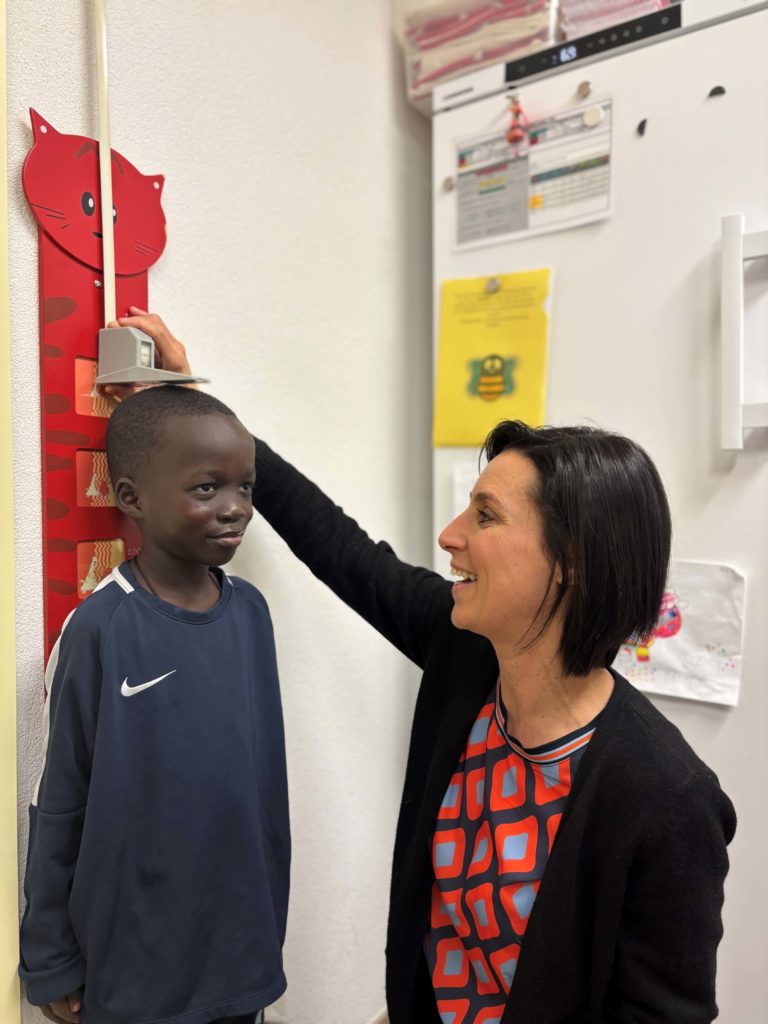
“The teams at Rennaz know the children from La Maison, their vulnerabilities, and their medical conditions. This enables tailored care to be provided, in an atmosphere of calm and shared understanding.”
Mélanie Casanova, Head of the Infirmary at La Maison
Looking to the future
Today, Saliou is doing better. He laughs, he learns, he runs about. His mother tongue, Wolof, is still with him, whilst his French improves as he grows, plays and discovers new things. He has crossed the threshold between anxiety and serenity, that delicate moment when a child allows himself to be guided, with confidence.
Thanks to your support, other children will also be able to navigate this critical phase, surrounded by caring presence and attentive care.
Your donation enables La Maison and this strong chain of solidarity to continue on this path of humanity, from the very first steps, where it all begins.
A reassuring presence from the very first moments
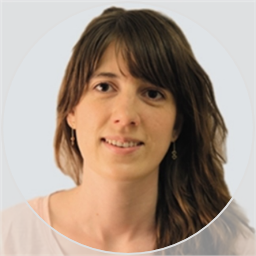
As a chaplain and spiritual guide, Karen Zucchinetti Rapin coordinates the group of volunteer mentors who support the children at La Maison during initial health assessments or unexpected hospitalisations. Acting as a link between the healthcare teams, La Maison, and the volunteers, she ensures that no child has to go through these moments alone, maintaining a reassuring and deeply human continuity.
What is your role in the partnership with La Maison?
My role is primarily to act as a link between the Riviera-Chablais Hospital, La Maison and the volunteers. I coordinate the presence of mentors with the children, whether upon their arrival for an initial health check-up or during unexpected hospitalisations. The aim is for a trusted adult to always be there for the child during the most sensitive moments.
How many volunteers are involved in this scheme?
We currently have twelve active volunteers. Some also act as conveyors, but their main role is at the hospital, alongside the children. They are deeply committed individuals, acutely aware of the fragility of these moments.
What arrangements do you make when the child arrives at the hospital, often after a long journey and without their parents?
We ensure that a mentor is present upon arrival. This initial human connection is essential. The child sees a face, feels cared for, and understands that they are not alone. Even when schedules are tight, we make this support an absolute priority.
What is the role of a mentor to a child?
Above all, they provide a reassuring presence. The bond is sometimes formed through words, but very often through non-verbal cues: a gesture, a posture, a gentle touch. Volunteers accompany the child during examinations, explain simply what is happening, and stay by their side. This human presence profoundly transforms the hospital experience.
Games also play an important role in this support. Why?
Because they are children. Play is a universal language. The ‘Sparadrap’ space, the hospital’s playroom, helps to lighten the wait and bring a touch of light-heartedness to a place where everything can seem overwhelming. It is a way of reminding the child that, above all, they are still a child.
Do the mentors only get involved during the initial assessments?
No. They can also be called upon during unexpected medical situations. When we receive news that a child has been admitted to the hospital, we try to organise support so that they do not have to go through these moments alone.
How does this partnership with La Maison make a difference for the children?
It creates a sense of human continuity. The healthcare teams know that a caring adult is present, and for our part, we know we can count on La Maison. Together, we surround each child with supportive care.
What does the Riviera-Chablais Hospital mean for the children staying at La Maison?
It is often their first contact with the healthcare system in Switzerland. An emotionally charged moment. We do everything we can to ensure this first experience is as welcoming as possible, despite what it entails emotionally.
On a personal level, what does this commitment mean to you?
It is a deeply human commitment. La Maison has gone through difficult times, but it has remained true to its values. I am touched to be able to contribute, in my own small way, to this chain of solidarity, and I look forward to continuing to strengthen this partnership.