

A long stay, great progress: the daily lives of Oluyomi and Eni-Ola
written on the 08.04.2026Since February 2025, many months have passed in Eni-Ola’s life. Long months away from her native Benin, relearning the most vital of skills: eating. At La Maison, she is not alone on this journey. At the tender age of three, Oluyomi is going through the same ordeal. Both little girls, who have conditions affecting their oesophagus, are here for a long-term stay. Their story paints a picture of care that combines medical professionalism with human compassion. We meet three members of the team who look after them day and night.
By Sanja Blazevic
A soothing cocoon
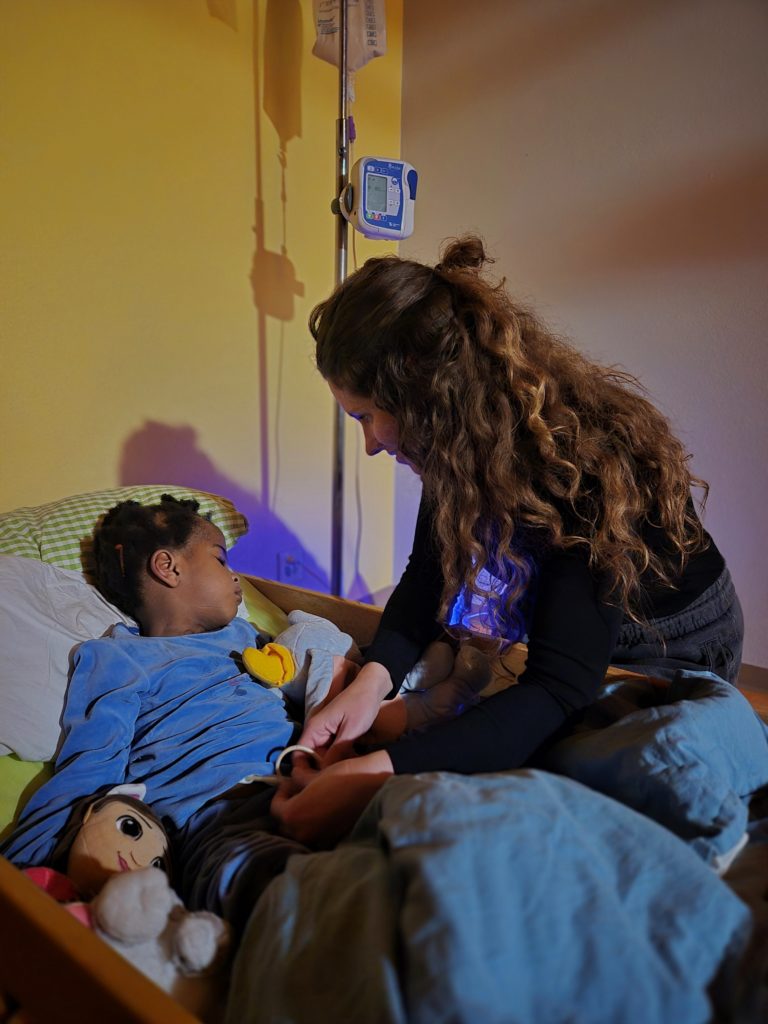
In the soft twilight of the children’s room, Oluyomi, half-awake, rocks her cuddly toy. It is 9.30 pm, an ordinary evening at the Pavillon, one of La Maison’s residential buildings. The three-year-old girl, lying in her bed, is being fed via a gastric tube. She was born with oesophageal atresia, a congenital malformation characterised by a blockage in the tube connecting the mouth to the stomach.
Aurélie Vouillamoz, a night nurse at La Maison, tends to her with tenderness. “The night-time feeding doesn’t disturb the children’s sleep; most of them are already asleep by that time. Oluyomi usually gives us a simple smile and then drifts back into her dreams,” she explains.
In a neighbouring room, seven-year-old Eni-Ola breathes deeply, a photo of her parents tucked under her pillow. She no longer needs tube feeding since she has relearned how to eat despite her oesophageal stenosis. A full year of care has passed for her since she arrived at La Maison in February 2025. Some evenings, she and her friend Soumaya laugh together, bringing childlike joy to this place of healing.
A long convalescence
Most children stay at La Maison for an average of three months. Those requiring long-term care, particularly for oesophageal strictures or atresia, stay for several months, sometimes for over a year. For these children in particular, a proper routine takes shape, consisting of small daily rituals and a growing bond with the nursing and educational staff.
For Oluyomi and Eni-Ola, the recovery process follows a similar path despite their different conditions. Both undergo one or more surgical procedures to repair their oesophagus. A long rehabilitation process then begins, during which they learn or relearn how to eat – an act so natural that most children master it effortlessly.
“For long-term care, it is important to maintain a consistent and steady approach over time, providing additional stability so that the child can rebuild their life. A new challenge arises, as we must set educational goals that can be worked on over several months,” explains Eloïse Borgeaud, an educator at La Maison, who is also studying for an interdisciplinary Master’s degree in children’s rights.
This stability becomes all the more crucial given that these children are in a complex emotional situation. Being separated from their families, repeated surgical procedures which, although necessary, are physically taxing: all of this requires particularly attentive care. “Our role is to support them as best we can through this process,” explains Eloïse.
Stécy Robert, one of the nurses at La Maison, adds: “Oluyomi and Eni-Ola have both made significant progress. It’s rewarding for us, but above all for them, as they’re proud to show us their progress and weight gain, one of the signs of their successful recovery.”
A growing bond
In this very special context, the bond that forms between the children and the staff at La Maison takes on a unique quality. “It’s a special bond that you don’t find anywhere else in a hospital setting, where children are usually accompanied by their parents,” observes Stécy. “The child becomes our main point of contact; it is to them that we ask all our questions; they are at the centre of everything.”
A different kind of bond develops with the children who stay for longer. “We become their second family, their anchor in a country they don’t know,” admits Stécy. “The relationship grows stronger over time,” confirms Aurélie.
This closeness is evident in the affectionate gestures of daily life. Every morning, Oluyomi pops in to say hello to the nursing team. Despite some resistance during her initial post-operative care, a relationship of trust has developed naturally.
Stécy continues: “She has undergone repeated operations but always keeps smiling. She’s a real ray of sunshine. She also shows great determination and is very resilient for her age.”
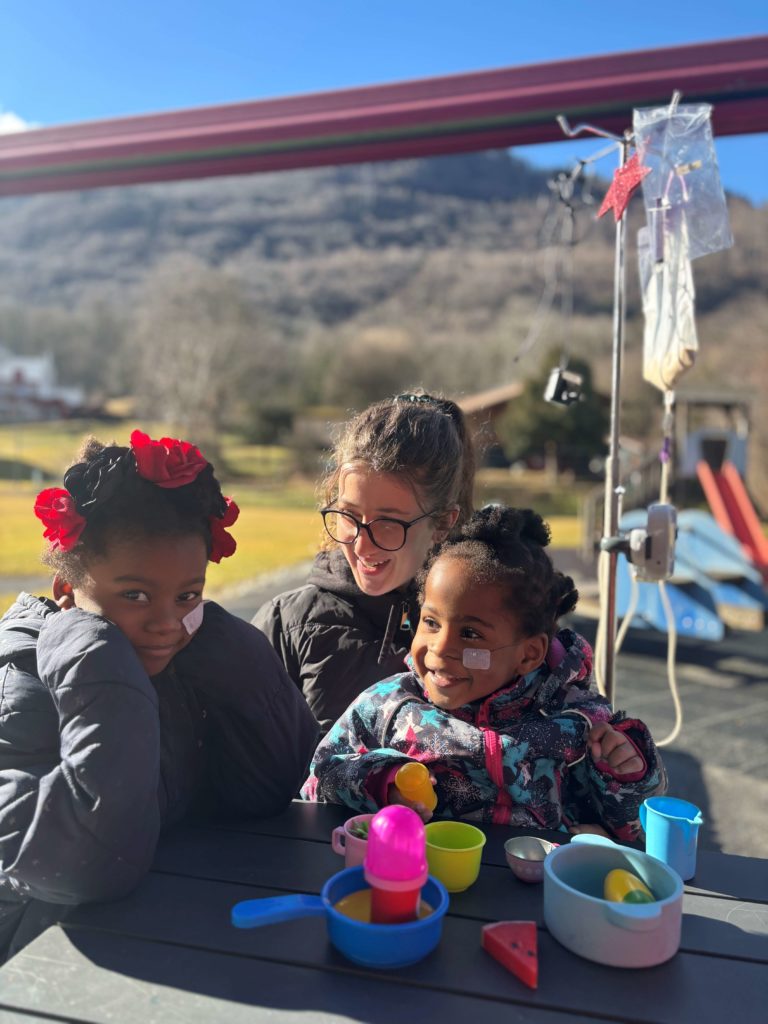
Eni-Ola, for her part, brings a special energy to the Pavilion, which has become her home for a few months. “She’s a very cheerful child with a contagious zest for life. Her bursts of laughter brighten up our daily routine,” says Eloïse with emotion. “And she loves playing pranks. In the morning, she and her roommates wake up early to hide before I arrive. This little ritual lifts the spirits of the other children and offers a brief respite from their illness.”
« It is about supporting the children, without replacing the other important figures in their life. »
Eloïse Borgeaud, educator
Caring for the “heart”
Beyond medical procedures and protocols, there is a profoundly human aspect to the work at La Maison. “When we start our shift in the evening, the children who are still awake run to give us a hug. These special moments are the most rewarding thing for me,” says Aurélie.
At night, the sense of closeness grows stronger. “As a night carer, some evenings are intense. We’re on our own, each in our own building – at La Maison or the Pavilion – looking after around twenty children. If they wake up, it’s usually because of a nightmare, pain, because they’re scared or not feeling well,” says Aurélie. “We can play them a lullaby, make them a hot chocolate, give them medicine or a hot water bottle. All of this brings them comfort, but what matters most is our presence. Most of the time, especially for the little ones, simply staying with them is enough to soothe them.”
Intimacy also comes into play when discussing changes to the body, with these conversations creating a vital space for dialogue. “The children sometimes ask us about their post-operative scars, like Eni-Ola, who wanted to know if she would have them forever. We explain to them that they will grow up with them, that these marks will remain for life,” adds Stécy.
“Attachment is a child’s primary need, essential to their development. In this context of separation from their family, their culture and everything that makes up their everyday world, the bonds of trust they build with us are crucial,” emphasises Eloïse. But this emotional closeness must be managed with great professional care. “It is built with the child, by making it clear to them that our support is limited in time, for the duration of their stay. It is about supporting them, without replacing the other important figures in their life.”
« Now, Oluyomi can speak. And she can eat, whereas she had never been able to do so before. »
Stécy Robert, nurse
Preparing to say “goodbye”
Recognising the temporary nature of the relationship also prepares them for separation, as Stécy explains. “The children will return to their home countries, and we need to keep things in perspective.”
For Eni-Ola, this stage is all the more eagerly anticipated as she has recently had a little brother. “She tells us she can’t wait to meet him. It will probably be relatively easy for her to leave, even though for most children there is always a mixture of joy and sadness at this moment,” adds Stécy.
The team puts strategies in place ahead of this transition, particularly for long stays. “We prepare for the child’s departure by counting down the remaining nights with them, so they can realise they’re going home,” explains Eloïse. “Where possible, we stay in touch with the family throughout the child’s stay. For Eni-Ola, for example, we regularly video call her parents, which is ideal for helping her maintain her sense of connection.”
Despite the attachment, the team views the separation in a positive light. “It’s a victory because we’ve managed to offer the child a better life,” says Stécy. For Oluyomi, the progress made is particularly striking. “Now she can speak. She no longer has an oesophagostomy, a hole in her neck created to allow her saliva to drain. And she can eat, whereas she had never been able to do so before. Her parents’ decision to let her go alone will not have been in vain,” notes the nurse with satisfaction.
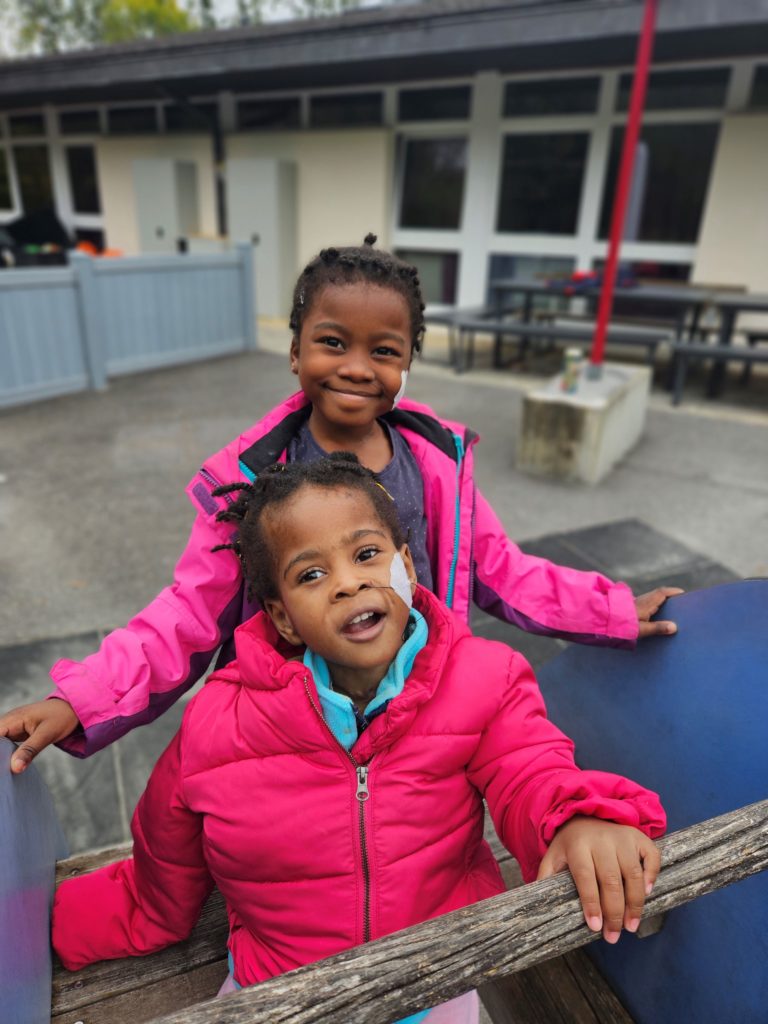
Oluyomi and Eni-Ola will therefore be able to eat normally when they return to Benin. The former loves playing with her toy kitchen and baking cakes for Eni-Ola. The latter, for her part, is mad about peanut butter on toast. “I eat it three times a day. In the morning, at snack time and in the evening,” she says with a mischievous smile.
At the time of departure
Departures often take place at the crack of dawn, between six and seven o’clock, or even earlier, depending on the flight schedule to Geneva. There is something special about these quiet hours. “Sometimes the children are still a bit sleepy. They’re the only ones up, or two or three of them if they’re leaving in a small group. It gives us a chance to share a few last moments before they leave,” says Aurélie.
“Of course, it tugs at our heartstrings,” admits the night nurse. “But we’re so happy for them. They’ve been well looked after and are going to be reunited with their families. I don’t see it as a sad thing, but rather with a sense of hope for their future.”
In her experience, children generally respond very well to this change. “The care team often tells us that it has been difficult for the child to say goodbye to the staff and their friends, especially after a long stay. But in the morning, when it’s time to get ready, you can sense a real excitement at the thought of going home,” she observes.
For Eloïse, leaving marks the culmination of a long journey towards recovery. “It’s wonderful to see them so full of energy after the trials they’ve been through. They run, play and are enthusiastic about their future.”
Thus, in this place where care and tenderness go hand in hand, Oluyomi and Eni-Ola represent those children who, far from their country and their families, find comfort and stability in the hands and voices of the La Maison team. Their story bears witness to the delicate balance between the attachment that is necessary for a child’s development and the right amount of distance that allows for a calm preparation for separation. A balance that makes every departure not an end, but a shared victory, made possible by an exceptional chain of solidarity.